
ShinCraft: Speed Awakens
SimulationCraft StudiosSimulation
3.2135.00 Reviews
- Version
- 140216
- Installs
- 10.00M
- Age Rating
- Teen
Screenshots
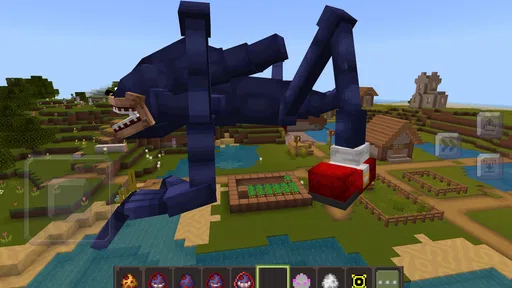
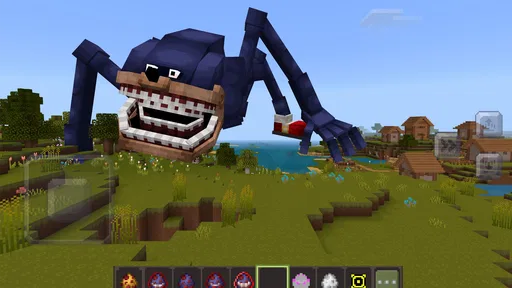
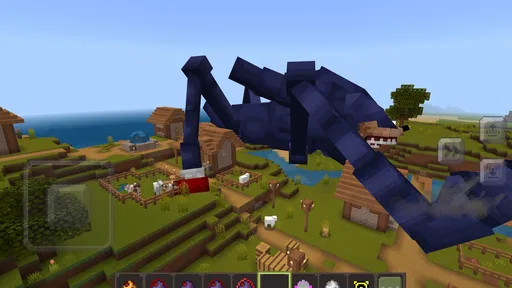
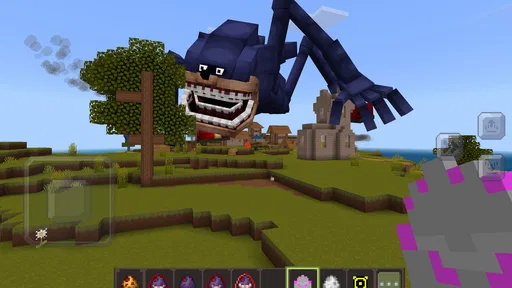
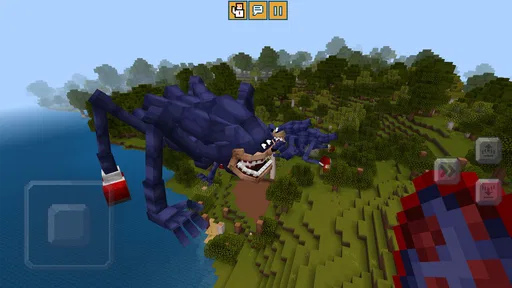
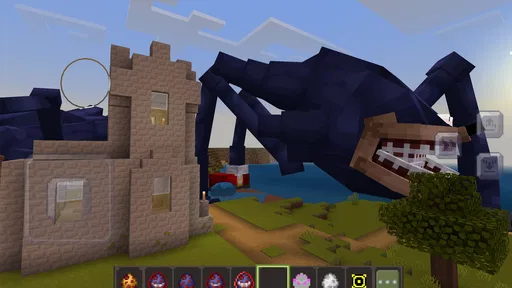
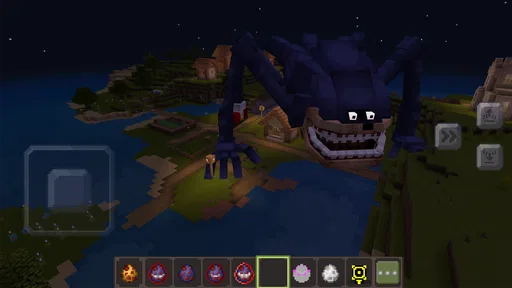
Our Review of ShinCraft: Speed Awakens
 Analysis by Appyee
ShinCraft: Speed Awakens is a free simulation game from SimulationCraft Studios that caught my attention because it puts movement and making things in the same blocky playground. I went in expecting a simple building experience, but the more interesting part is the way the game encourages me to alternate between doing something quickly and changing the space around me. That combination gives each short visit a clear starting point, even when I do not have a large project in mind.
The first thing to understand is that this is not presented as a quiet construction tool alone. It aims for a more active style of play, where speed matters alongside creativity. I can approach it as a casual game for a few spare minutes, or treat the world as a place to experiment with layouts and ideas. The result is uneven in places, but it has a recognizable personality rather than feeling like a plain copy of a standard block-building formula.
How the action, feedback, and reset fit together
I find the most useful way to judge this loop is to watch whether each change gives me a clear next move, rather than expecting every attempt to feel like a major achievement. When the action, feedback, and reset work together, even a small adjustment can make a short session feel complete. That distinction helps explain why the game suits quick experiments better than a long, tightly planned building project.
The first action gives the game its identity
My first useful impression came from moving through the blocky environment and testing how quickly I could turn an idea into something visible. In many building games, the opening minutes are mostly about collecting materials or learning a long list of systems. Here, the appeal is more immediate: I can make a change, see its effect, and decide whether to continue in that direction. That direct response is important because it keeps the game from feeling like an empty construction box.
The speed theme also changes how I think about mistakes. I am less likely to spend too long protecting a perfect design when the whole experience invites experimentation. A rough structure can be a starting point rather than a failure. I found that useful when trying different paths through an area or arranging blocks in a way that made movement feel more natural. The game works best when I accept that the first version is temporary.
That does not mean every action feels equally satisfying. Players who want a highly detailed building system may find the experience too light, especially if they prefer careful planning over quick changes. ShinCraft: Speed Awakens is better suited to someone who enjoys seeing an idea take shape without turning every decision into a technical project. Its strength is immediacy, not deep construction management.
The feedback rhythm keeps short sessions moving
The central rhythm is easy to describe: I move, interact with the blocky world, notice the result, and then look for the next small objective. That feedback loop is what makes another attempt tempting. Even without committing to a large build, I can create a modest challenge for myself, such as finding a faster route, improving the shape of an area, or making a previously awkward section easier to navigate.
This rhythm is particularly useful on a phone because it does not require me to prepare for a long session. I can open the game while waiting for an appointment, play for a while, and stop after a small experiment. The same structure also works on a tablet, where the larger display gives the world more room to breathe. I would still recommend trying the controls before planning an ambitious project, since a fast game loses some of its appeal when movement or placement feels imprecise.
One practical habit helped me get more from it: I stopped trying to improve everything at once. Instead, I chose one visible problem, changed it, and immediately tested the result. This makes the action-feedback relationship much clearer. If I alter several parts of an area before checking how it feels, I lose track of which change helped. For a game built around speed, small controlled experiments are more rewarding than chaotic rebuilding.
The game’s average rating is 3.2 from around 9.6 thousand ratings, which matches my impression that the experience will appeal strongly to some players while leaving others unconvinced. It has also passed 10 million installs, so it clearly has broad visibility, but popularity alone does not remove the need to decide whether this particular mix of movement and creativity suits you.
What counts as a reward here
The reward is less about a complicated progression plan and more about visible improvement. I enjoy returning to an area and recognizing that it now works better because I changed it. A route that felt clumsy can become more comfortable. A plain section can gain a little character. Those small wins are enough to create momentum when I am playing casually.
That design also makes the game approachable for creative players who do not always want a survival-style burden. I can focus on shaping an environment instead of treating every block as part of a long resource calculation. If you like making spaces that reflect your own taste, the open-ended side gives you room to do that. If you need constant rewards, unlocks, or a strong narrative reason for every task, the experience may feel less motivating.
My most useful approach was to give each session a simple theme. One visit might be about improving movement through a small area; another might be about making a space look more deliberate. This turns an apparently open-ended game into a series of manageable goals. It also avoids the common problem of entering a creative game, staring at an empty world, and closing it because there is no obvious first step.
There is a trade-off in that freedom. Because I am supplying much of the motivation myself, the game can feel quiet when I am not in the mood to invent a project. That is not necessarily a flaw, but it is worth knowing before installing it. ShinCraft: Speed Awakens is not the best choice for someone who wants the game to constantly tell them what to do. It is more rewarding when I arrive with curiosity and a willingness to test ideas.
The reset is part of the appeal
A good session usually ends when I have learned something about a route or completed a small change, not only when I have exhausted every possible activity. I can step away with a clear idea for what to try next time. That makes the reset feel productive rather than empty. The world becomes a work in progress, and the next session begins with a question: can I make this faster, cleaner, or more interesting?
This is where the game’s speed-and-creativity pairing has its best effect. A reset does not have to mean abandoning the previous attempt. It can mean looking at the same space with a different intention. I may return to test a revised layout, simplify an overcomplicated area, or start a fresh experiment because the previous one showed me what I did not want. The ability to treat mistakes as information is one of the more enjoyable aspects of the design.
For everyday play, I would suggest stopping after a meaningful result rather than forcing a long session. If I continue after the creative energy has gone, the game can start to feel repetitive. Ending after a successful adjustment preserves the reason to come back. This is a small but important difference between a game I revisit naturally and one I abandon after trying to play it for too long in one sitting.
Who will enjoy it most
I think this game is a good fit for players who like block-based simulation but want more movement and immediacy than a purely relaxed builder usually provides. It also suits people who enjoy experimenting without worrying that every imperfect idea has ruined a long campaign. Younger players may find the visual style inviting, although the Teen content rating means families should make their own decision about whether it is appropriate.
It can also work for someone who has never spent much time with this kind of game. The basic appeal is easy to understand: enter a blocky world, act, change something, and try again. You do not need to begin with a grand design. A small route or simple area is enough to learn how the game wants you to think.
I would skip it if your priority is a richly guided adventure, a detailed economic simulation, or a building game where every material and tool has a carefully layered purpose. Players who prefer slow, precise construction may also find the emphasis on speed distracting. In those cases, a more specialized building or sandbox alternative would probably be a better match than trying to force this game into a role it does not seem designed to fill.
How it compares with familiar alternatives
Compared with a conventional block-building sandbox, ShinCraft: Speed Awakens feels more focused on the moment-to-moment relationship between movement and making changes. A traditional sandbox may give me more time to gather, plan, and develop a large world. This game’s advantage is that it encourages quicker decisions and shorter experiments. I would choose the usual sandbox when I want a long-term construction project; I would choose this one when I want to test an idea without making a full evening of it.
Compared with a pure racing or movement game, it offers more room for personal expression. Speed is not the only reason to play; the environment itself becomes part of the activity. The compromise is that it may not deliver the same focused intensity as a dedicated action game, nor the same depth as a dedicated creative builder. Its appeal sits between those categories, which explains both its freshness and its limitations.
That middle ground is useful for families or friends with different tastes, provided everyone is comfortable with the controls and the game’s Teen rating. One person can concentrate on moving efficiently while another thinks about how the space should look. Even when I play alone, switching between those mindsets prevents the experience from becoming one-note.
Practical details before you install
The game is free, so it is easy to try without making an upfront purchase. I would still approach the first session as a test rather than assuming it will replace every other simulation game. The most important question is whether the controls and pace feel natural on your device. A game built around quick action can be enjoyable on one screen and frustrating on another if input feels cramped or hard to read.
ShinCraft: Speed Awakens was released on January 9, 2025, and the current version is 140216. It supports devices running Android 7.0 or later. Those details make it accessible to a wide range of Android users, including people who are not using a recent phone, although actual comfort will still depend on the hardware and display.
The developer is SimulationCraft Studios, and the game’s store short description is simply “ShinCraft.” I mention that because the full name is more descriptive of the experience: the important distinction is the attempt to combine quick movement with creative changes in a blocky world. That is the idea I would keep in mind when deciding whether to download it.
One useful preparation is to begin with a small, repeatable task instead of searching immediately for the biggest possible project. Try to make one area easier to cross, then repeat the route after changing it. This reveals whether the action feels satisfying and whether the game’s feedback is clear enough for you. It is a better test than spending the opening minutes making something elaborate before understanding how the world responds.
The loop verdict
My overall view is positive but specific. The strongest part of ShinCraft: Speed Awakens is the loop of action, visible feedback, modest reward, and a reset that gives me a reason to try again. I like that a session can produce a useful result without requiring a large commitment. The game has a clear identity when I treat it as a fast creative playground rather than expecting a full-scale simulation or a conventional adventure.
Its weaknesses come from the same design choice. Players who need deep systems, constant direction, or highly structured progression may run out of motivation. The open-ended nature can also make a session feel less purposeful when I do not set my own goal. For me, the solution is to play in short experiments and stop after a meaningful improvement instead of waiting for the game to manufacture excitement.
My recommendation is to try it if you want a free simulation game where movement and creativity constantly feed into each other. I would not recommend it as a universal replacement for established sandbox builders or dedicated action games. It is more modest than either specialist option, but that in-between position is exactly why I can imagine returning to it: there is always one more route to test, one more space to reshape, and one more quick session waiting after the reset.
Verdict
Strengths of ShinCraft: Speed Awakens
- Fast-paced matches are easy to start and fit well into short play sessions.
- A broad roster encourages experimentation with different combat styles.
- Anime-inspired visuals give battles a colorful and energetic presentation.
- Regular rewards help new players build a useful team early on.
- Multiple game modes add variety beyond the main campaign.
Limitations of ShinCraft: Speed Awakens
- Progress can slow noticeably without frequent upgrades and resource management.
- Some advanced features may require a substantial amount of grinding.
- The interface can feel crowded when several menus and events are active.
- Combat may become repetitive after extended sessions.
- Online features depend on a stable connection and may consume mobile data.
Similar Picks in This Category
View All
Truckers of Europe 3
Wanda Software4.3

Town Building Life Simulator
XGame Global4.2

Fidget Toys Trading・Pop It 3D
Freeplay Inc4.7

Sculpt People
CrazyLabs LTD4.4

Scary Teacher 3D
Z & K Games4.2

Hair Tattoo: Barber Shop Game
CASUAL AZUR GAMES4.3
Frequently Asked Questions
What is ShinCraft: Speed Awakens?
ShinCraft: Speed Awakens is a mobile game that combines fast-paced action with character progression and a fantasy-inspired adventure setting. Players typically build a team, improve their characters, complete missions, and participate in battles that require quick decisions. Before downloading, check the current store description because available modes, characters, story content, and gameplay systems may vary between updates or regions.
Is ShinCraft: Speed Awakens free to download and play?
The game can generally be downloaded without an upfront purchase, but free access may be supported by optional in-app purchases, advertisements, or limited resources. These purchases can include characters, upgrades, currency, cosmetic items, or progression boosts. I recommend reviewing the payment settings before playing, especially on a shared device, because spending may make progression faster even when the main game remains accessible for free.
Does ShinCraft: Speed Awakens require an internet connection?
You should expect ShinCraft: Speed Awakens to need an internet connection for at least some of its features. Online access may be required for account synchronization, event participation, advertisements, updates, rewards, or server-based battles. Even if certain menus or early content appear available offline, the complete experience may not work without a stable connection, so mobile data usage is worth considering.
Is ShinCraft: Speed Awakens suitable for children?
Suitability depends on the age rating shown on the Google Play Store or Apple App Store and on your comfort with fantasy combat, online interaction, advertisements, and in-app purchases. Parents should check the game’s rating, privacy information, chat or social features, and purchase controls before installation. If younger players use the device, enabling parental restrictions is a sensible precaution.
What should I check before downloading ShinCraft: Speed Awakens?
Before downloading, verify that your phone meets the listed Android or iOS requirements and has enough free storage for the initial installation and later updates. Also check the latest reviews, developer information, permissions, privacy policy, regional availability, and whether your device supports the current version. A reliable Wi-Fi connection is recommended for downloading and updating the game, particularly if the package is large.
Play our best games!


